EYE SURFACE CARE
Pterygium & eye surface care
Understand your symptoms. Ask useful questions. Make a plan with your ophthalmologist.
QUICK CLINICAL OVERVIEW
A pterygium is a growth of tissue from the white of the eye toward the cornea. It may cause irritation, redness, or changes in vision. An examination distinguishes it from other surface problems and helps determine whether observation, symptom treatment, or a discussion about surgery is appropriate for your eye.
General education only. This page does not diagnose a condition or replace an examination. Treatment options and results vary.
UNDERSTANDING PTERYGIUM
What a pterygium is
A pterygium is a raised, often triangular growth of tissue on the eye’s surface. It commonly begins on the white part of the eye near the nose and can extend onto the clear cornea. A pterygium is benign, but any new or changing eye-surface growth should be examined to confirm what it is.
Long-term ultraviolet exposure is an important contributor, and wind, dust, and dryness can irritate the surface. You do not need to be a surfer to develop this condition. Tell your ophthalmologist about outdoor work, hobbies, and environments that seem to make the eye uncomfortable. 1
How it can affect comfort and sight
A small pterygium may mainly cause redness, watering, or irritation. As it extends across the cornea, it can alter the cornea’s shape and cause astigmatism, which affects how the eye focuses. Growth toward the central cornea may also interfere with vision.
The impact is different for each person. Explain whether your main concern is recurring discomfort, blurred sight, visible growth, or appearance. Be specific about when symptoms occur and which activities they interrupt. This helps the consultation address what matters to you without assuming that every pterygium needs the same treatment. 2
What your ophthalmologist looks for
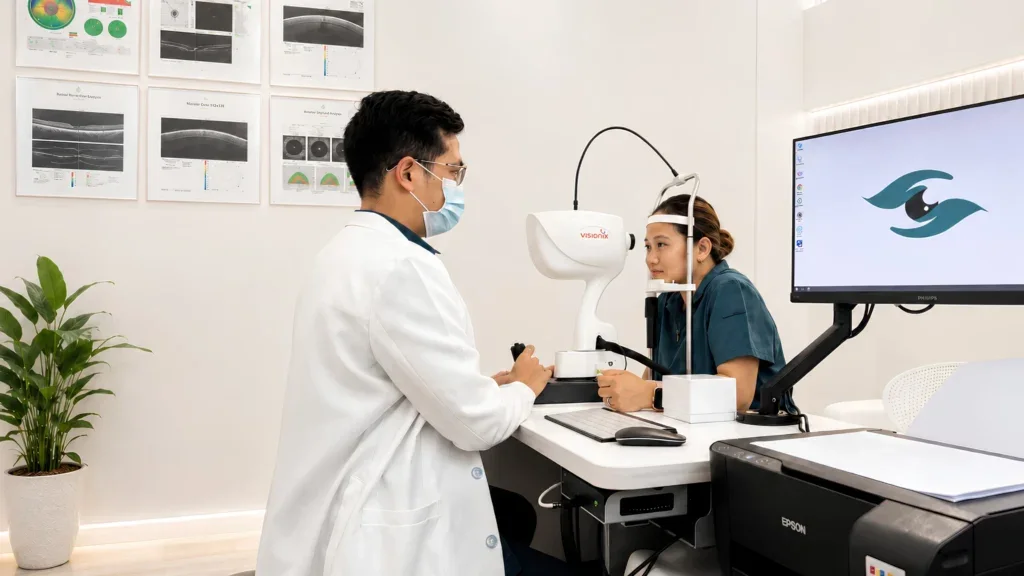
The eye’s surface can be examined with a slit lamp, a microscope with a bright light. This allows the ophthalmologist to assess the growth and surrounding tissues. Follow-up examinations help establish whether it is changing and whether your vision is affected.
A small, comfortable pterygium may be monitored rather than removed immediately. Ask what changes would make treatment more appropriate and when the eye should be checked again. Mention any drops you already use and whether they help. If you have older eye records or photographs showing the change, bring them to the appointment. 1
Relieving symptoms and considering removal
Lubricating drops or ointment may be recommended to ease irritation. These measures can improve comfort, but they do not remove the growth itself. The ophthalmologist will discuss whether symptom management and observation are enough or whether surgery is worth considering.
Reasons to discuss removal include persistent irritation, an effect on vision, or concerns about appearance. Explain your priorities and ask what improvement is realistic. A useful conversation covers the option of continued observation, the expected benefits of surgery, and its risks. Surgery should follow an assessment of your eye and an informed discussion of the alternatives. 2
Surgery, healing, and the possibility of recurrence
Surgery removes the abnormal tissue. A surgeon may cover the exposed area with a small graft of conjunctiva to help reduce the chance of regrowth. The technique, anesthetic, and aftercare depend on the individual case and should be explained before you agree to the procedure.
A pterygium can return after removal, and other risks include infection and scarring. Follow the prescribed eye-drop plan and attend recovery checks. Ask when you can resume work, swimming, and contact lenses, and arrange someone to accompany you home. Increasing redness or pain after surgery should prompt contact with the treating team. 3
FURTHER READING
1. Cleveland Clinic — Pterygium
2. Guy’s and St Thomas’ NHS Foundation Trust — Pterygium
3. Guy’s and St Thomas’ NHS Foundation Trust — Pterygium surgery
When to arrange an evaluation
Use these points to prepare for a conversation about your eyes.
- Visible tissue growing toward the clear cornea
- Persistent grittiness or irritation
- Recurring redness
- A growth that appears to be changing
- Blur associated with a surface growth
- Questions about protection from sun and dust
A LITTLE GUIDANCE
Not sure where to start?
A short educational check can help you organize what to discuss. It cannot confirm a diagnosis or decide whether you need surgery.

TIME-SENSITIVE SYMPTOMS
Sudden changes need urgent care.
Sudden vision loss, a curtain or shadow, new flashes or many floaters, or a painful red eye with nausea need immediate medical assessment. Go to the nearest emergency department or contact an eye doctor urgently. Do not wait for an online reply.
YOUR CONSULTATION & CARE
A clear path, one step at a time.

Explain the irritation
Note when it started, what makes it worse, and whether your vision has changed.

Assess the surface
The doctor examines the growth and the rest of the eye.

Talk through care
Discuss symptom relief, protection, and whether further treatment is needed.

Know what to watch
Ask how to monitor changes and when to return.
QUESTIONS YOU MAY HAVE
Let’s make things clearer.
Does every pterygium need surgery?
No. Treatment depends on symptoms, the size and progression of the growth, and any effect on vision.
Can a pterygium return after removal?
Yes, recurrence is possible. Ask about the expected benefits, risks, and follow-up for your situation.
Can I choose drops on my own?
Ask an eye professional which drops are appropriate. A red or irritated eye can have several causes and should not be diagnosed from appearance alone.
Can I use my HMO or PhilHealth?
Please contact the clinic to confirm coverage for your chosen facility, doctor, and planned service. Eligibility and benefits vary.
YOUR NEXT STEP
You don’t have to figure it out alone.
Bring your questions. A consultation can help you understand your findings and the options available to you.